
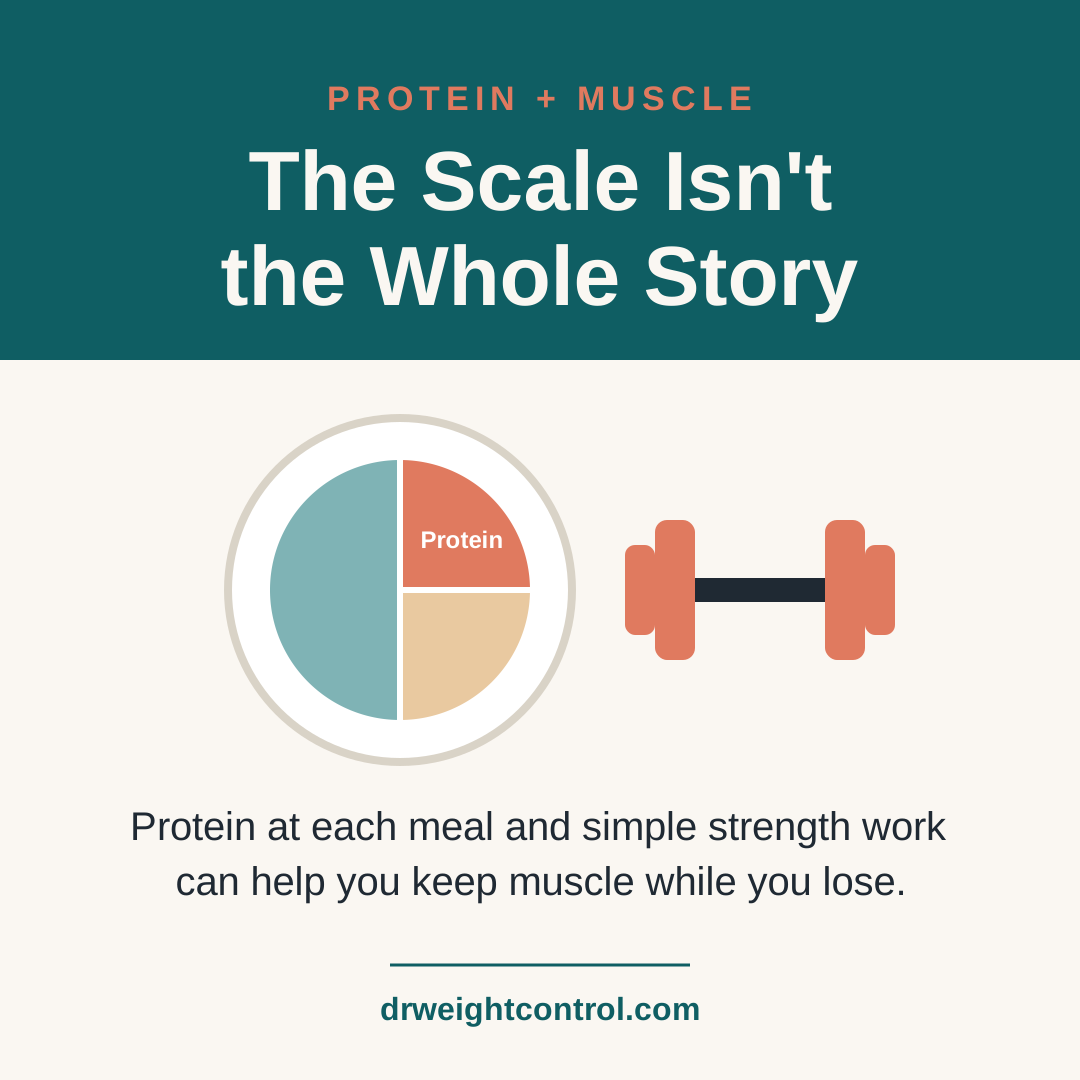
Protein, Muscle, and Why the Scale Isn't the Whole Story
Many of my patients come in focused on one number. They step on the scale, and that number decides whether it was a good week or a bad one. I understand why. The scale is simple, it's right there in the bathroom, and for years it may have been the only measure anyone talked about.
But the scale weighs everything at once. It can't tell the difference between body fat, water, and muscle, and that difference matters a great deal. Two people can lose the same amount of weight and end up in very different places. One feels stronger, moves more easily, and keeps the weight off. The other feels tired and weak and finds the weight creeping back.
Much of that difference comes down to muscle, and to two habits that help protect it: eating enough protein and asking your muscles to do some work. Neither one requires a complicated diet or hours at the gym. Here's why they matter and how to fit them into a normal week.
What the Scale Can't Tell You
When you lose weight, you lose a mix of things. Ideally most of it is excess body fat. Some of it is water, especially early on. And some of it can be lean tissue, including muscle.
How much muscle you lose isn't fixed. It can depend on how quickly you're losing weight, how much protein you're eating, how active you are, and whether you're doing any kind of strength work. A very aggressive diet with little protein and no resistance exercise tends to cost more muscle than a steadier approach that pays attention to both.
This is one reason I don't judge progress by speed alone. If someone loses weight quickly but much of it is muscle, the scale looks great while the body is actually losing something valuable.
Why Muscle Matters More Than Most People Think
Muscle isn't only about appearance or athletic ability. It's what lets you carry groceries, climb stairs, get up from a low chair, play with grandchildren, and stay steady on your feet. It helps protect your joints and your balance.
Muscle also plays a part in metabolic health. It's one of the main places your body uses glucose, which is part of why staying strong can support healthier blood sugar. Muscle tissue uses energy just to maintain itself, so keeping it can help your body's energy needs from dropping more than they have to as you lose weight. I don't want to oversell that last point, because you'll see a lot of exaggerated claims online about muscle "burning fat all day." The effect is real but modest. The bigger reasons to protect muscle are strength, function, and how well you can keep living the life you want.
Why This Matters More After 40
Most adults gradually lose muscle as they age, and that process can speed up when we become less active. Many people don't notice it happening. Their weight may stay about the same while their body slowly carries less muscle and more fat. Clothes fit differently, everyday tasks feel a little harder, and weight seems easier to gain than it used to be.
For women, the hormonal changes around menopause can add to this. Body fat tends to shift toward the abdomen, sleep can suffer, and energy for exercise may drop. For men, gradual changes in hormones and activity can play a similar role.
None of this means your body is broken or that weight loss is hopeless after 40. It means muscle needs a bit more deliberate attention than it did at 25. The good news is that muscle responds to protein and resistance exercise at any age. I've seen patients in their 60s and 70s get noticeably stronger once they start.
Appetite Medications Make Protein More Important, Not Less
At our practice, some patients use appetite control medications such as phentermine or topiramate, and some use semaglutide. These medications can help quiet constant hunger, which for many people is the very thing that made previous attempts so hard.
There's a side effect of eating less that people don't always think about, though. When your appetite is smaller, every bite counts more. If those smaller meals are mostly crackers, chips, or sweets, it becomes easy to fall short on protein without realizing it. With semaglutide in particular, many patients feel full quickly and some deal with nausea, so meals naturally get smaller.
That's why I encourage patients on any appetite medication to put protein first on the plate. Eat the protein portion before you fill up on everything else. A medication can make eating less easier, but what you choose to eat still shapes what kind of weight you lose. Medication and good nutrition work best together, not as substitutes for each other.
What "Enough Protein" Looks Like on a Plate
You'll find all kinds of protein targets online, some reasonable and some extreme. The right amount depends on your size, age, activity, health conditions, and kidney function, so I'd rather set a goal with you individually than give everyone the same number.
For most people, though, a practical starting point is simple: include a real source of protein at every meal, not just at dinner. Many people eat very little protein at breakfast and lunch and then have a large portion in the evening. Spreading it out through the day is easier on your appetite and gives your body a steady supply.
A rough visual guide works well for many people. A portion of meat, chicken, or fish about the size and thickness of your palm is a reasonable place to start at a meal. Build the rest of the plate around it with vegetables and some fruit or whole grains.
Good protein sources include:
- Chicken, turkey, lean beef, pork, and fish
- Eggs and egg whites
- Greek yogurt and cottage cheese
- Milk or a protein shake when time is short
- Beans, lentils, tofu, and edamame
- Cheese, nuts, and seeds in smaller amounts
If you have kidney disease or another medical condition, please talk with us before significantly increasing your protein. Your needs may be different.
Protein Without Turning Meals Into Math
I don't want anyone weighing every bite or tracking grams in an app for the rest of their life. For some people, tracking for a short time is a helpful way to learn. For most, a few simple habits do the job.
Start with breakfast, since that's where many people fall shortest. Eggs, Greek yogurt with fruit, cottage cheese, or a protein shake are quick options. Leftover chicken from last night works too. There's no rule that breakfast has to look like breakfast.
Keep easy protein on hand. A rotisserie chicken, hard-boiled eggs, canned tuna or salmon, string cheese, and single-serve yogurt make it easy to put something together when you're tired or rushed.
Upgrade the meals you already eat rather than starting over. Add chicken to a salad. Add beans to soup. Choose a sandwich with more turkey and less bread. At a restaurant, build the order around the protein and go lighter on the sides.
Snack with a purpose. If you get hungry between meals, a snack with some protein tends to hold you longer than one that's mostly sugar or refined starch.
None of this requires giving up foods you enjoy. It's mostly a matter of asking at each meal, "Where's my protein?"
You Don't Need a Gym Membership to Protect Muscle
Protein provides the building blocks, but muscle also needs a reason to stay. Resistance exercise gives it that reason. When you regularly ask your muscles to work against some resistance, your body is more likely to hold on to them during weight loss.
This doesn't have to mean heavy weights or a gym. For many people, a simple routine at home is a fine place to start:
- Sitting down and standing up from a chair, slowly, several times
- Wall push-ups or push-ups against a kitchen counter
- Stepping up onto a low, sturdy step
- Light dumbbells or resistance bands for the arms and shoulders
- Carrying grocery bags or a laundry basket with good posture
A couple of short sessions a week is a meaningful start, and you can build from there. Walking is excellent for your heart and overall health and I encourage it, but it doesn't replace strength work. The two complement each other.
If you have joint problems, heart disease, or another condition that affects exercise, check with us first. We can help you find a safe starting point.
Better Ways to Measure Progress
Since the scale can't tell you what kind of weight you're losing, it helps to watch a few other signs too. How your clothes fit, especially around the waist, is useful. So is how you feel climbing stairs or carrying things. Many patients notice they can do more repetitions of an exercise than they could a month ago, or that they have more energy in the afternoon.
At our office, we also look at measures like blood pressure, lab results, and overall health over time. A week when the scale doesn't move but you're stronger and your waist is smaller isn't a failed week. It may be a very good one.
Building a Plan That Protects What Matters
The goal of weight loss isn't simply to weigh less. It's to be healthier, stronger, and more comfortable in your own body, and to have an approach you can actually keep up. Protecting muscle is a big part of that, and it gets more important with age and when you're eating less because of an appetite medication.
At Physicians Weight Control and Wellness, we look at the whole picture: your nutrition, your activity, your medical history, any medications, and the goals that matter to you. We also offer nutrition and lifestyle coaching to help make habits like these practical in your daily routine. If you'd like help building a plan that protects your muscle while you lose weight, we'd be glad to talk with you at our Arlington or Waco office.
Helpful FAQs
How do I know if I'm eating enough protein?
A simple check is whether each of your meals includes a clear source of protein. If breakfast and lunch are usually light on protein, that's a good place to start. Your provider can help set a more specific target based on your health.
Can I build muscle while losing weight?
Some people can, particularly those who are new to resistance exercise. For many others, the more realistic goal during weight loss is to preserve as much muscle as possible. Both are good outcomes.
Do I need protein shakes?
No. Food works well. Shakes can be convenient on busy days or when appetite is low, but they aren't required.
Book a visit or call Arlington (817) 429-2929 or Waco (254) 754-1438.