
What to Expect at Your First Medical Weight Loss Visit
A lot of people tell me they almost canceled their first appointment. Some have tried to lose weight on their own for years and feel a little embarrassed to be asking for help. Others have had a bad experience somewhere else and expect to be lectured, weighed in front of a crowd, or handed a diet sheet and sent out the door. A few simply don't know what a medical weight loss visit involves, and not knowing makes it easy to keep putting it off.
I understand all of that. Walking into a new office and talking about your weight is not a small thing. So I want to take some of the mystery out of it. Here is what actually happens at a first visit with us, why we do each part, and what comes next.
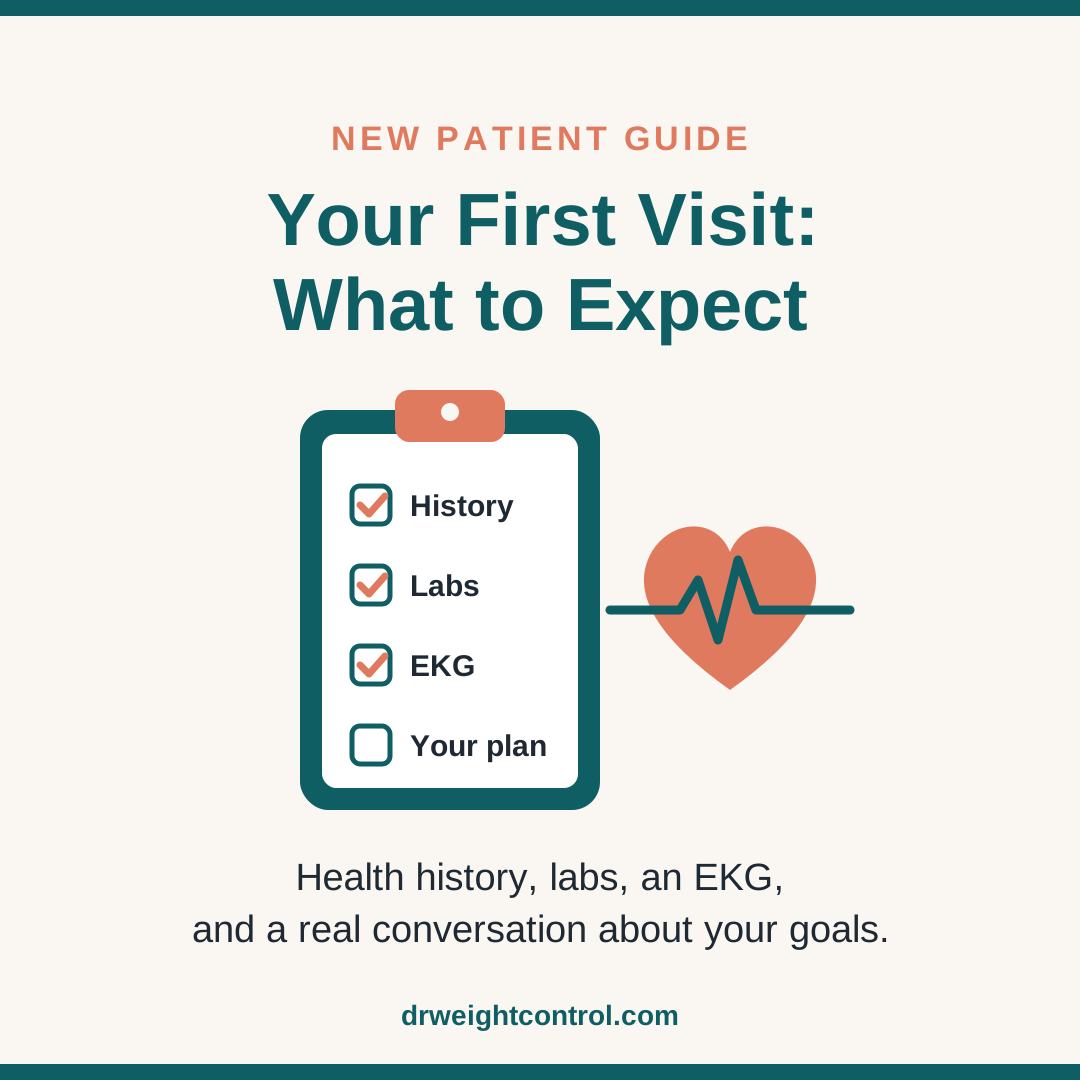
The short version: we spend the first visit getting to know your health, not judging it. Everything we ask and every test we run has one purpose, which is making sure the plan we build together is safe and fits you.
Why the First Visit Happens in Person
I'm often asked why the first appointment can't be done by video. Follow-up visits can be, for established patients, and many people find that convenient. The first visit is different.
Before I recommend any treatment, especially a prescription medication, I need a real picture of your health. That means checking your blood pressure and heart rate, drawing labs, doing an EKG, and examining you in person. Some of the medications that can help with appetite and weight affect heart rate or blood pressure, and some aren't a good fit for people with certain medical conditions. I don't want to guess about those things. I want to know.
There's also something to be said for sitting across from someone. A first conversation about weight often brings up a lot: health worries, family history, years of frustration. That conversation tends to go better face to face.
Your Health History Comes First
Much of the first visit is a conversation about your health. We'll ask about current and past medical conditions, surgeries, and anything you're being treated for now. We'll ask about family history too, because conditions like diabetes, heart disease and thyroid problems can run in families and can affect which treatments make sense.
We'll also ask about things that might not seem connected to weight at first. How are you sleeping? Do you snore or wake up tired no matter how long you sleep? How is your energy during the day? For women, we may ask about menstrual cycles or menopause symptoms, since hormonal changes can affect weight, sleep and how you feel overall.
None of these questions are meant to put you on the spot. Weight is influenced by many different parts of your health, and the more complete the picture, the better the plan.
Bring Your Medications (and Supplements)
One of the most helpful things you can do before your visit is put together a list of everything you take. That includes prescription medications, over-the-counter products, vitamins, and any supplements, including anything marketed for weight loss or energy. Bringing the bottles works just as well.
There are two reasons this matters. First, some medications can contribute to weight gain or make weight loss harder for some people. That doesn't mean you should stop anything on your own. It means it's worth knowing, so it can be discussed with whoever prescribes it. Second, I need to know what you're taking so I don't recommend something that interacts poorly with it. Supplements count here too. People often leave them off the list because they don't think of them as medicine.
Labs: Looking Beneath the Surface
At the first visit we draw blood for lab work. The specific tests depend on your history, but they generally help us look at things like blood sugar, cholesterol, kidney and liver function, and thyroid function.
Labs matter because a lot of what affects weight and long-term health doesn't show up on the scale or in how you feel. Someone can feel fine and still have elevated blood sugar or abnormal cholesterol. Finding those things early gives us useful information, and sometimes it changes the plan. It also gives us a starting point, so later on we can see whether your health is improving along with your weight.
Our office will let you know ahead of time if there's anything you need to do before your labs, such as whether to come in fasting.
Why We Do an EKG
An EKG (electrocardiogram) is a quick, painless test that records your heart's electrical activity. You lie down for a few minutes with small stickers on your chest, arms and legs. There are no needles and nothing to feel.
We do it because your heart matters a great deal when deciding on treatment. Some appetite control medications, such as phentermine, can raise heart rate or blood pressure in some people. Before prescribing anything like that, I want to know your heart's rhythm looks normal. An EKG also gives us a baseline record we can refer back to later if questions come up.
Most people's EKGs are unremarkable. When something does show up, we'd much rather find it before starting treatment than after.
The Conversation About Your Goals and Past Attempts
This is the part of the visit I think matters most. I want to hear what you've already tried, what worked for a while, and what didn't. Many of my patients have lost weight several times before. They don't need someone to tell them to eat less. They need someone to help figure out why the weight kept coming back.
So we'll talk honestly about your eating patterns, your schedule, your activity, your stress, and what a realistic week looks like for you. If you work nights, travel constantly, or are raising kids and eating whatever's left on their plates, that's useful to know. A plan that ignores your actual life won't last.
We'll also talk about what you want. For some people it's a number on the scale. For others it's having more energy, sleeping better, bringing down blood pressure or blood sugar, or simply being able to keep up with the grandkids. Your goals shape the plan, and they're allowed to change as you go.
Putting Together a Plan
Once we have your history, exam findings and goals, we start building a plan. Depending on what's appropriate for you, that may include nutrition guidance, practical changes to daily habits, a plan for physical activity, and in some cases a prescription medication to help manage appetite. For some patients, that may be an appetite control medication like phentermine or topiramate. For others, semaglutide may be worth discussing. Not every medication is right for every person, and some aren't appropriate at all for people with certain medical or family histories. That's exactly why the evaluation comes first.
Medication is never the whole plan. Even when it helps, what you eat, how you move, how much protein you're getting, how you sleep and how you manage stress still matter. The goal is to lose excess weight in a way that protects your health and that you can keep living with.
Some lab results take time to come back. If anything in your results changes the plan, or needs follow-up with your primary care doctor, we'll go over it with you.
What Happens After the First Visit
Weight management works best with regular check-ins, not a single appointment. Follow-up visits give us a chance to see how you're doing, adjust the plan, check how you're tolerating any medication, and talk through whatever has been hard.
For established patients, some follow-ups can be done by video, which can make staying on track a lot easier when work, kids or the drive get in the way. Other visits still need to happen in the office, for example when we need to check your blood pressure, repeat labs, or reassess your treatment. We'll let you know which kind of visit makes sense as you go.
Follow-ups also aren't graded. If a week went sideways, I want to hear about it. Those are often the most useful conversations, because they tell us what part of the plan needs to change.
Taking the First Step
If you've been thinking about medical weight loss but feel nervous about that first appointment, that's completely normal. Most people walk out of their first visit feeling relieved. They finally have real information about their health and a plan built around their own life, not someone else's diet.
At Physicians Weight Control and Wellness, we see patients in our Arlington and Waco offices. Your first visit is with our medical team, and it's a conversation, not a lecture. If you're ready to find out what might be making weight loss difficult for you, and what could help, we'd be glad to meet you.
Helpful FAQs
Why does my first visit need to be in person?
Your first visit includes an exam, labs and an EKG. Those help us understand your health before recommending any treatment, especially prescription medication. Some follow-up visits for established patients can be done by video.
Will I be prescribed medication at my first visit?
Not necessarily. Medication can be helpful for some patients, but whether it's appropriate depends on your health history, exam, test results and goals.
What should I bring?
A list of all your medications, vitamins and supplements (or the bottles themselves), along with any relevant medical records you have. Our office will tell you if there's anything you need to do before your labs.
What is an EKG, and does it hurt?
An EKG records your heart's electrical activity using small stickers placed on your skin. It takes a few minutes and is painless.
Do I have to have a specific goal weight in mind?
No. Some people come in with a number, and others want better energy, sleep, blood pressure or blood sugar. We'll talk through what matters to you.
Book a visit or call Arlington (817) 429-2929 or Waco (254) 754-1438.